Inside the book
The book opens with a short guide, a three-page index, and the variety summary. Then 67 identical sari pages, each framed with the motif border you see around this site.
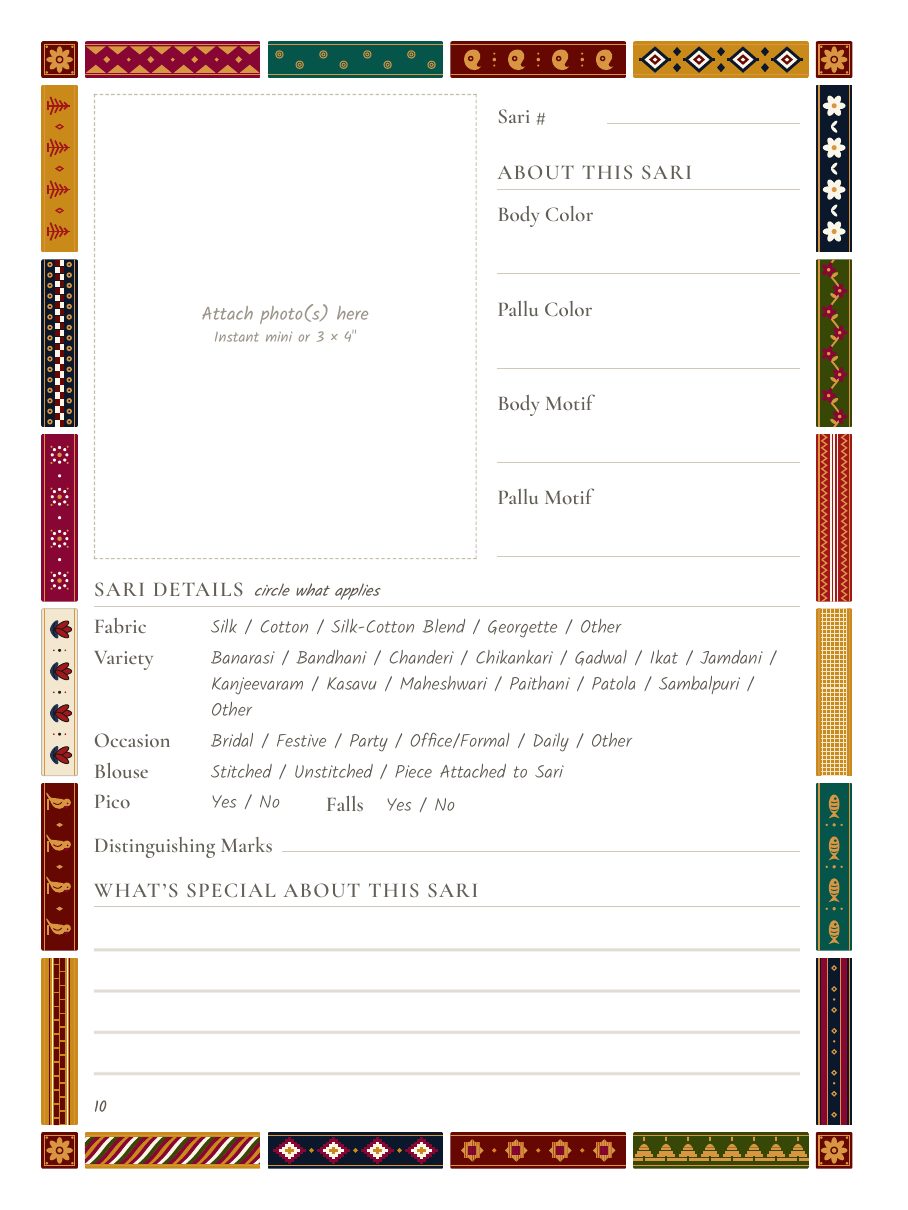
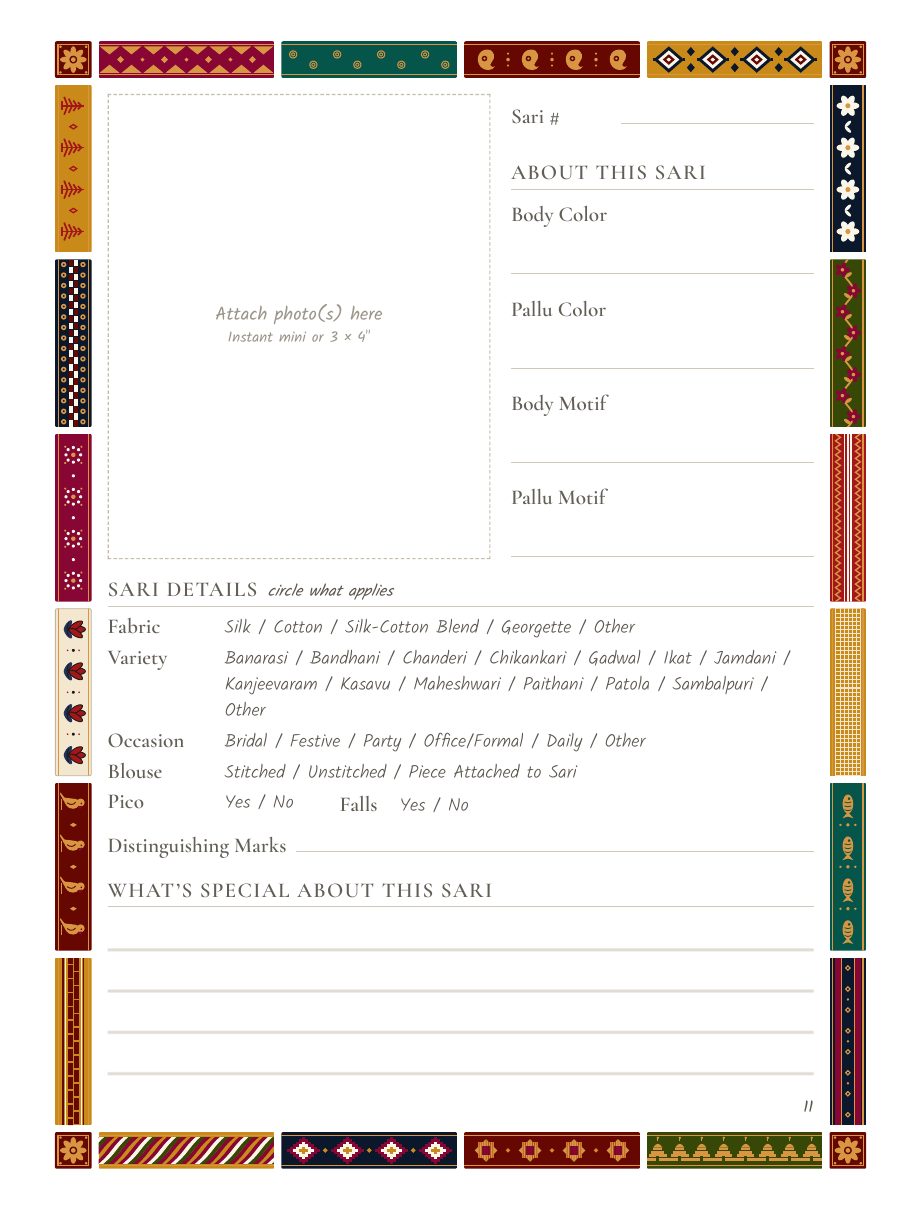
Sample entries, filled in by hand.
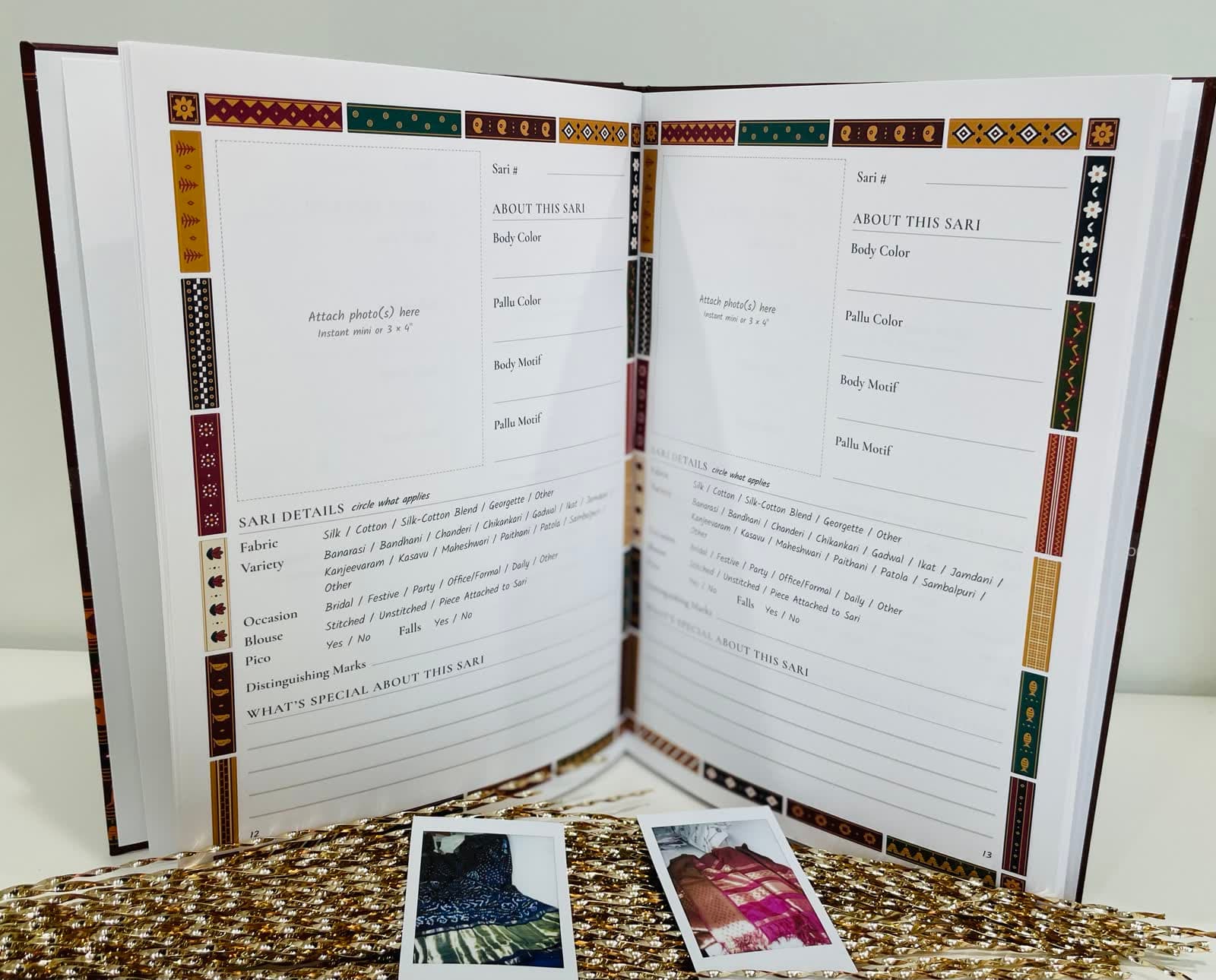
The printed book
Pages from a copy in use. The photographs are instant mini prints, the entries are in ballpoint.
Two instant prints, ready to be pasted in.
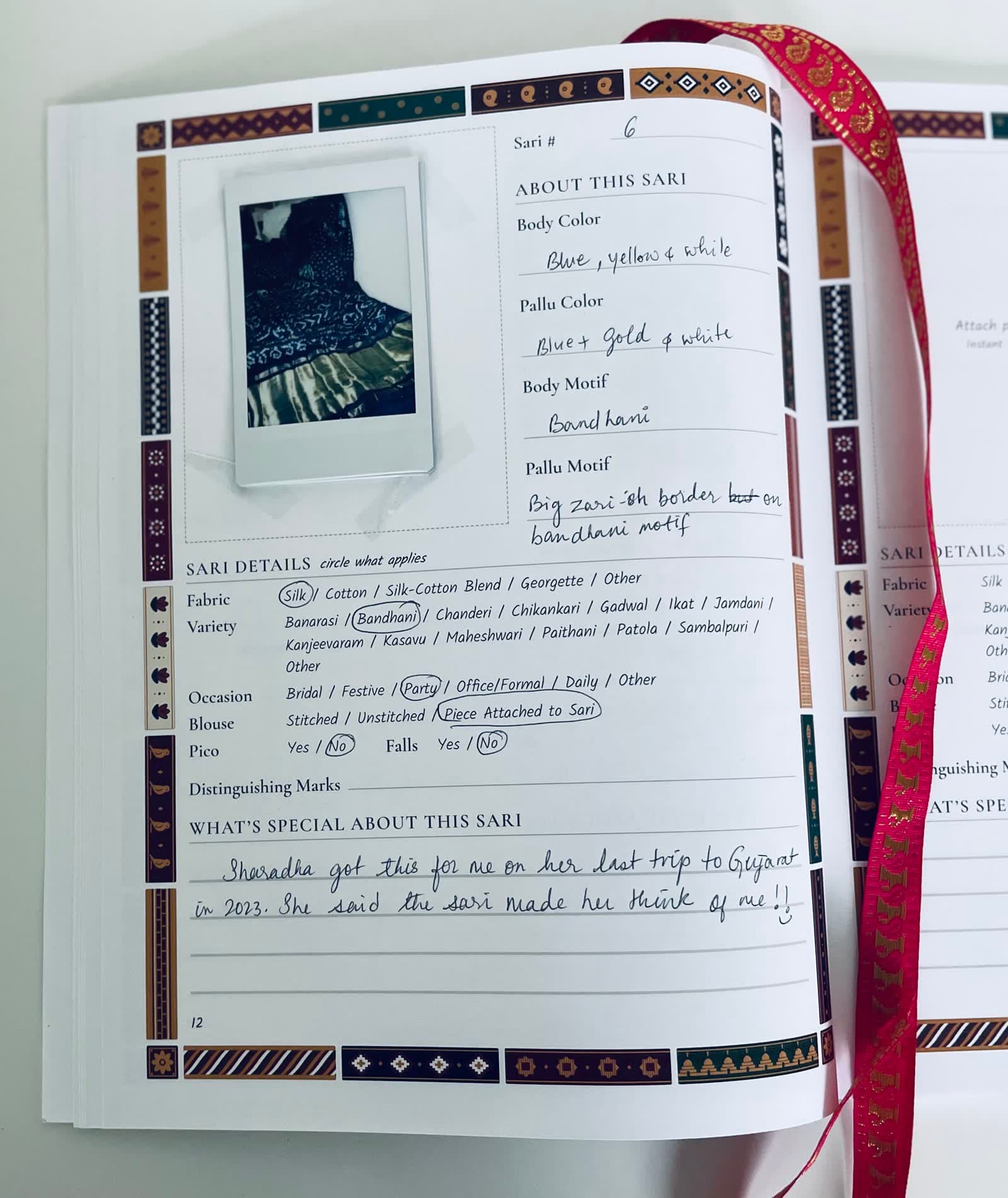
A finished page: print, details circled, the story below.
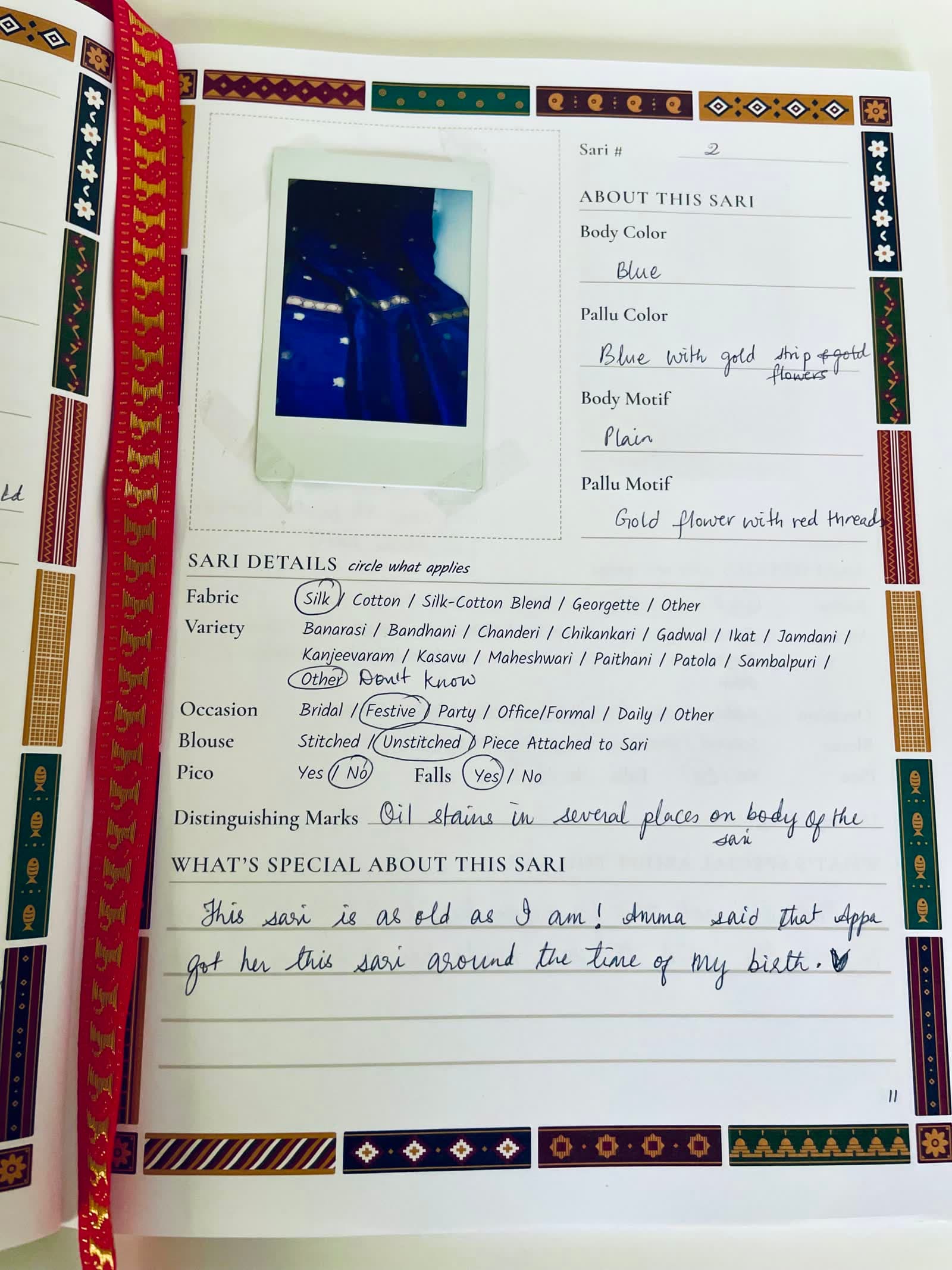
Blue silk, festive, as old as its owner.
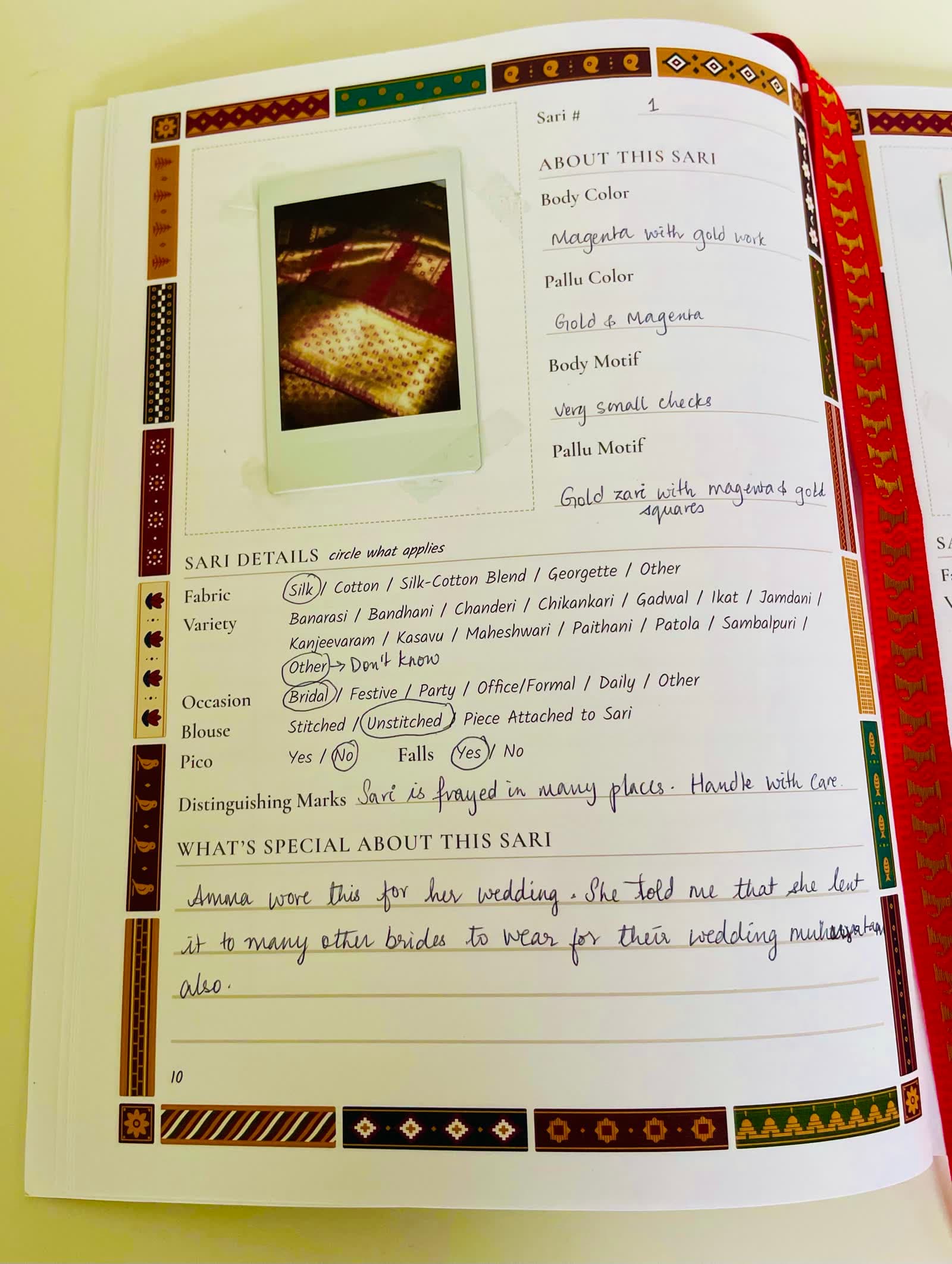
A wedding sari, lent to many other brides since.
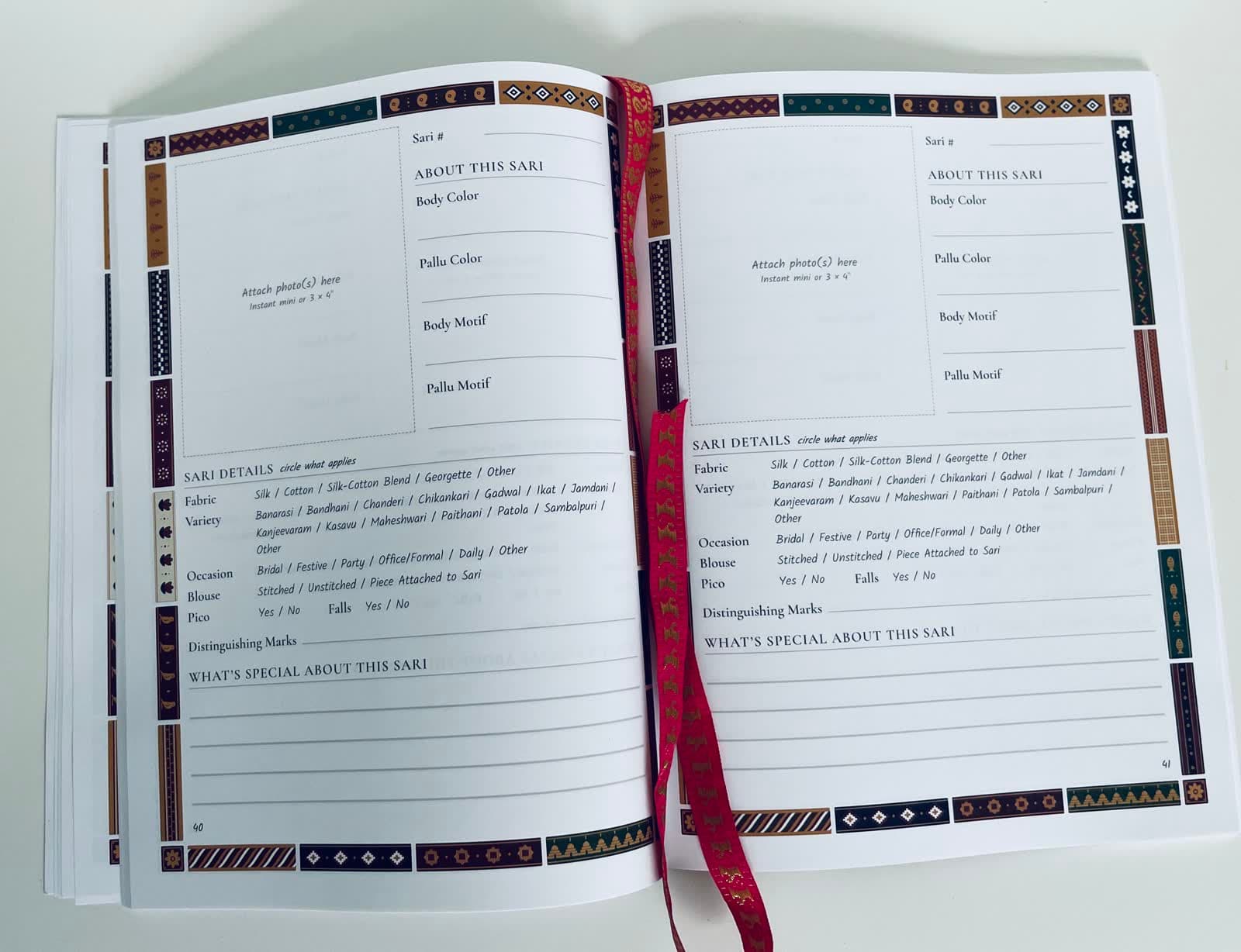
Two saris per opening, 67 pages in all.
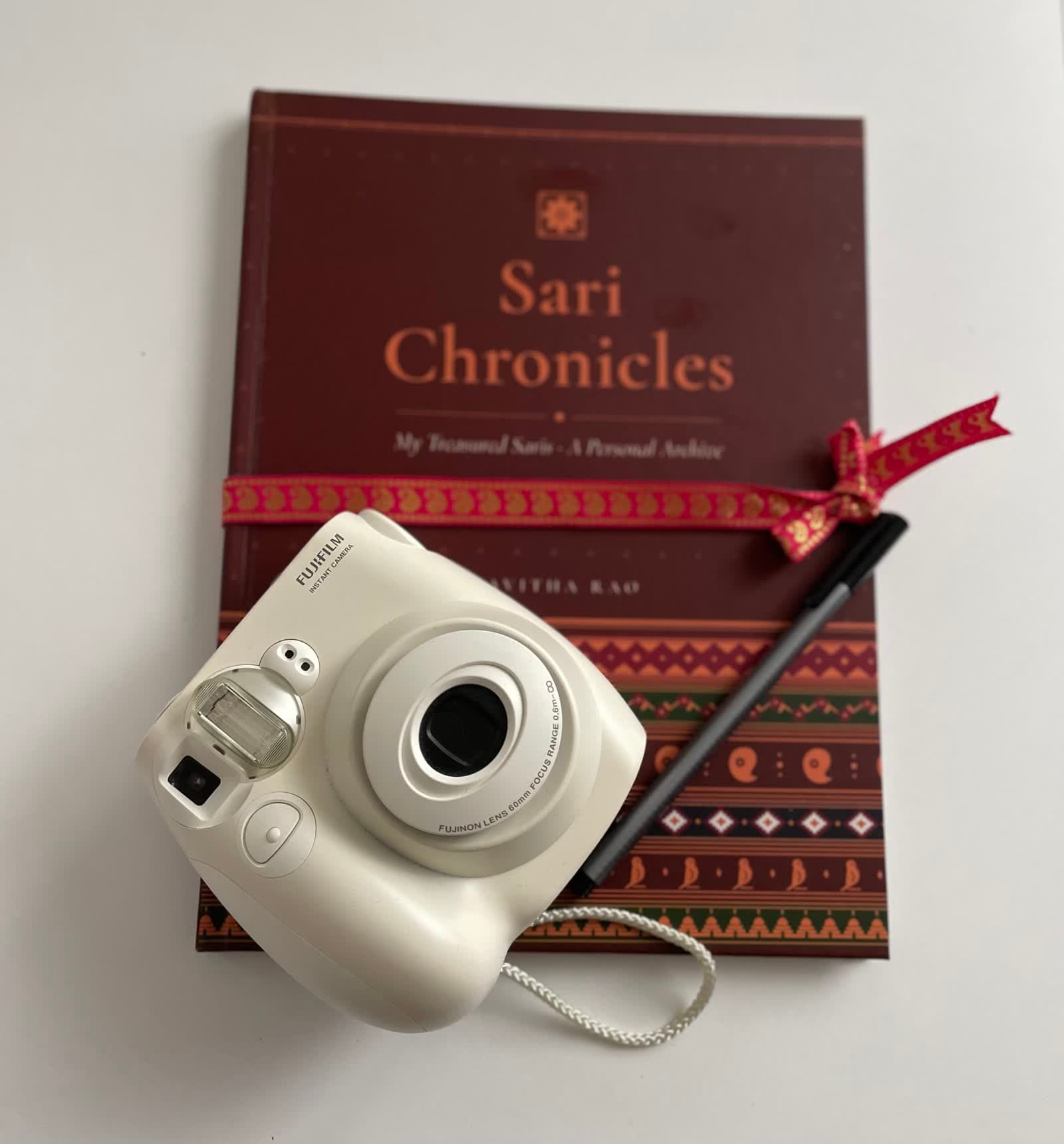
An instant mini print fits the photo box exactly.
One sari page
- About this sari
- Body colour, pallu colour, body motif, pallu motif.
- Photo box
- Fits an instant mini print or a 3 × 4 inch photograph.
- Fabric
- Silk / Cotton / Silk-Cotton Blend / Georgette / Other
- Variety
- Banarasi / Bandhani / Chanderi / Chikankari / Gadwal / Ikat / Jamdani / Kanjeevaram / Kasavu / Maheshwari / Paithani / Patola / Sambalpuri / Other
- Occasion
- Bridal / Festive / Party / Office or Formal / Daily / Other
- Blouse
- Stitched / Unstitched / Piece attached to sari
- Pico and Falls
- Yes / No for each
- Distinguishing marks
- One line, only if needed.
- What’s special about this sari
- Open space to write freely.
Terms explained
- Sari Type
- A one-sentence descriptor of the sari, in your own words. For example: “Blue Banarasi with red border and green pallu; mango motif.”
- Pallu
- The decorative end-piece of the sari, draped over the shoulder, often patterned differently from the body.
- Motif
- The main pattern or design: floral, peacock, temple, paisley, geometric.
- Pico
- A tiny zig-zag finishing stitch along the sari’s raw edge. Look at the very edge of the fabric, not the border design.
- Falls
- A strip of fabric stitched inside the bottom hem to weigh the sari down and stop fraying.
- Blouse, stitched
- A blouse has already been tailored and is ready to wear.
- Blouse, unstitched
- A separate piece of fabric for a blouse is included, but not yet tailored.
- Blouse, piece attached
- The blouse fabric is still attached to the sari as one continuous piece, not yet cut or stitched.
- Distinguishing marks
- Any small, unique feature, a snag, a faded patch, an odd knot, that helps you tell two similar-looking saris apart later.
A few tips
- Ballpoint pens and pencils work best. Gel pens, fountain pens, markers and highlighters can show through the page.
- Attach photos with photo corners, double-sided tape, or glue dots rather than liquid glue.
- For the Sari # column, use whatever numbering matches how you have organised your cupboard or storage.